ANCAP has announced changes to its new 2026-2028 vehicle assessment criteria, with the safety authority breaking its assessment into pre-, during- and post-crash ‘stages of safety’.
Every three years, ANCAP (Australasian New Car Assessment Program) reassesses its protocols – the method and rating criteria for testing new vehicles – to keep ratings relevant to emerging technology, with the current protocols covering 2023-2025.
The 2026-2028 ‘new generation’ protocols come into effect for vehicles assessed from January 1, 2026, and were developed in partnership with Euro NCAP (European New Car Assessment Program).
While full details of the new protocols are yet to be announced – and are expected early in the new year – ANCAP has issued a preview of its approach for 2026 and onwards.
CarExpert can save you thousands on a new car. Click here to get a great deal.
Key changes see a focus on electric car batteries, as well as intrusive driver assist tech and cars without physical buttons – all part of a holistic view of crash scenarios including before and after a collision.
ANCAP said the changes to the rating criteria were arrived at using the Haddon Injury Prevention Index “which examines what happens before, during and after a crash”.
“This new approach also provides a structure that can adapt to the technological developments that will shape the automated driving future,” said ANCAP CEO Carla Hoorweg.
A vehicle’s safety rating is valid for up to six years, meaning the latest three-year protocols must anticipate advancements in vehicles on sale as late as 2034.
“Our role is to continually push for improvements in all areas of vehicle safety, and our 2026 protocols reflect that,” said Ms Hoorweg.
“The outcome will be better protection of vehicle occupants and those around them, through the active prevention of crashes, superior protection in the event of a crash, and improved post-crash management.”
Scoring
From 2026, four key areas – which ANCAP calls the ‘Stages of Safety’ – will make up the final safety rating, with each featuring a total of 100 points, used to calculate a combined final score.
The stages are: Safe Driving, Crash Avoidance, Crash Protection and Post Crash, with ‘minimal thresholds’ in place for each stage for a vehicle to formulate a final star-rating.
These replace the current four pillars of Adult Occupant Protection, Child Occupant Protection, Vulnerable Road User Protection and Safety Assist.
ANCAP’s star rating system will continue to award up to five stars to a vehicle, with the higher the number indicating a greater level of safety per the testing criteria.
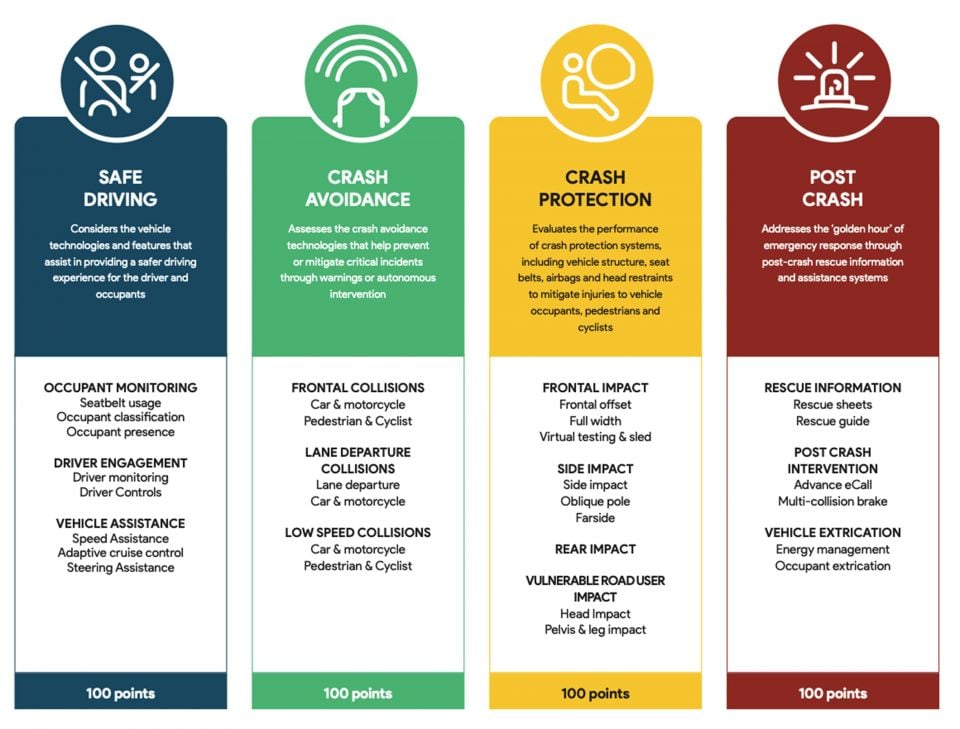
Safe Driving looks at elements from seatbelt use to driver fatigue warnings and advanced driver assist systems (ADAS).
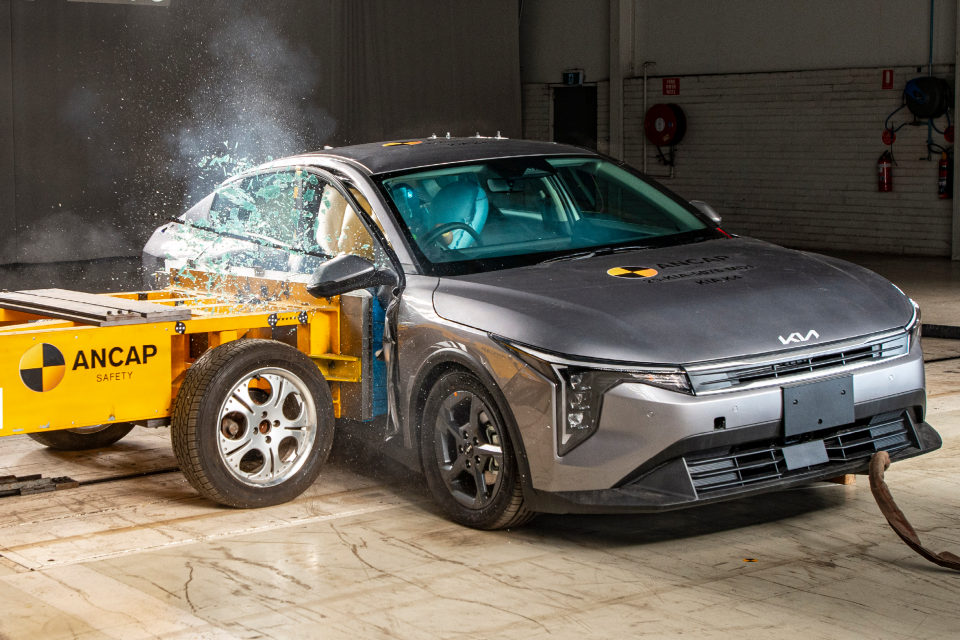
Crash Avoidance examines systems to prevent accidents, while Crash Protection looks at physical elements – airbags, head restraints and vehicle structure – that eliminate or reduce injury to occupants and other road users.
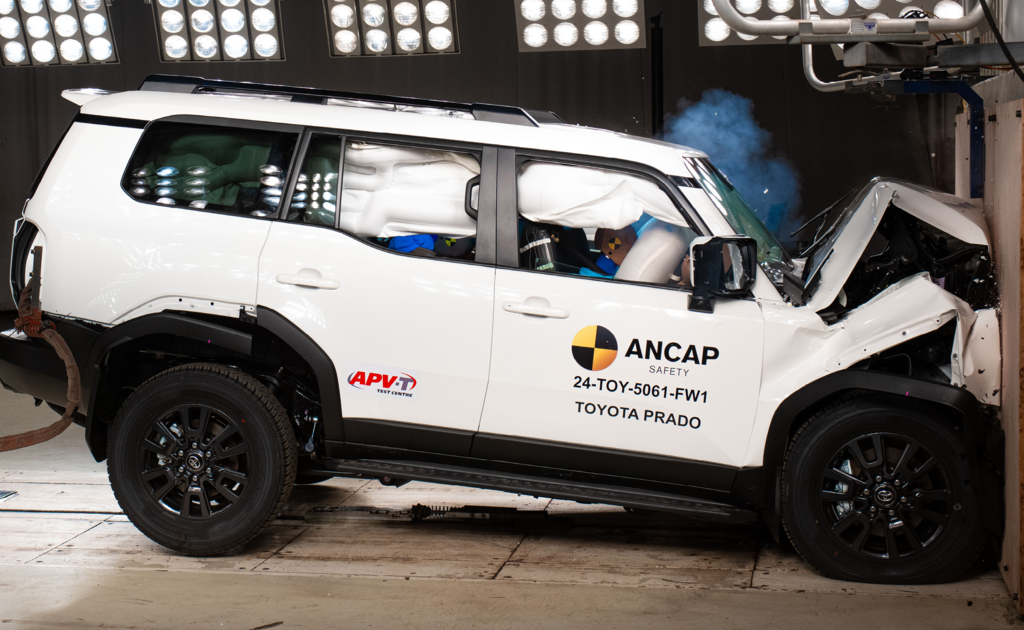
It’s here that new testing changes will be put in place, with any test which results in a red critical region on a crash-test dummy – indicating the most dangerous scenario – automatically limiting a car’s rating to four stars.
For vehicles where a seat collapses, such as when the MG 3 driver’s seat twisted during Euro NCAP tests earlier this year, the score for that particular test will be reduced by 50 per cent.
The tests haven’t changed markedly; however, a third dummy has been added for the full-width frontal test, with the rear female passengers joined by a male front passenger dummy.
The test also sees a deformable crash barrier in place of the previous rigid wall, which ANCAP said will provide more accurate information on airbag deployment and effectiveness.
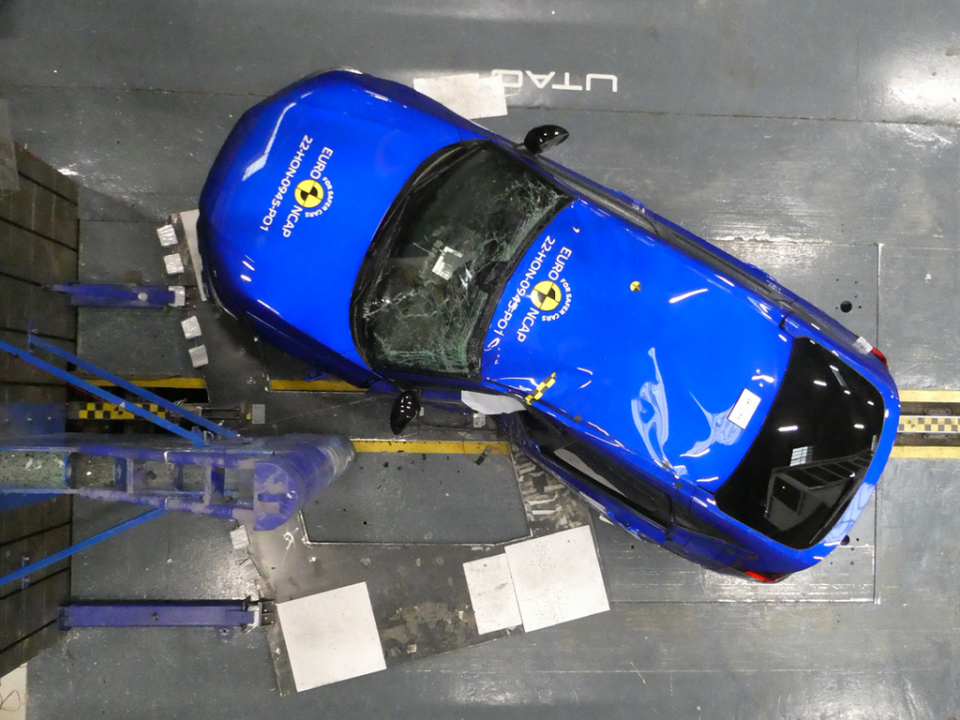
ANCAP said more elements will be added to its whiplash test, including seat structure analysis, while rollover protection criteria will determine if curtain airbags remain inflated for a suitable amount of time.
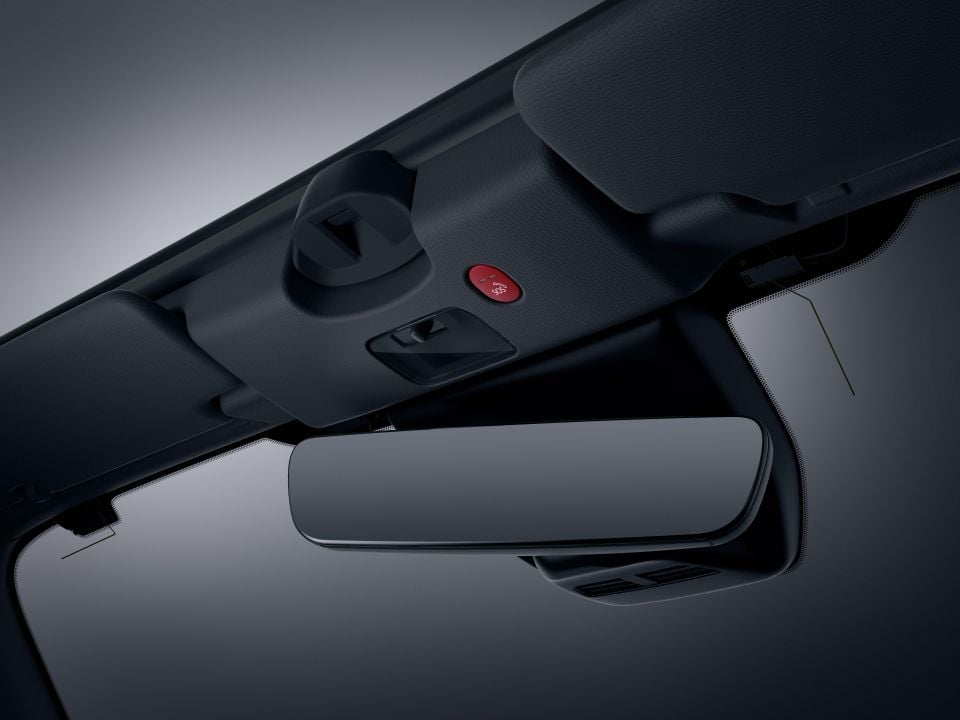
The Post Crash stage considers emergency assistance and response systems, such as a vehicle’s ability to call triple-zero.
Prevention
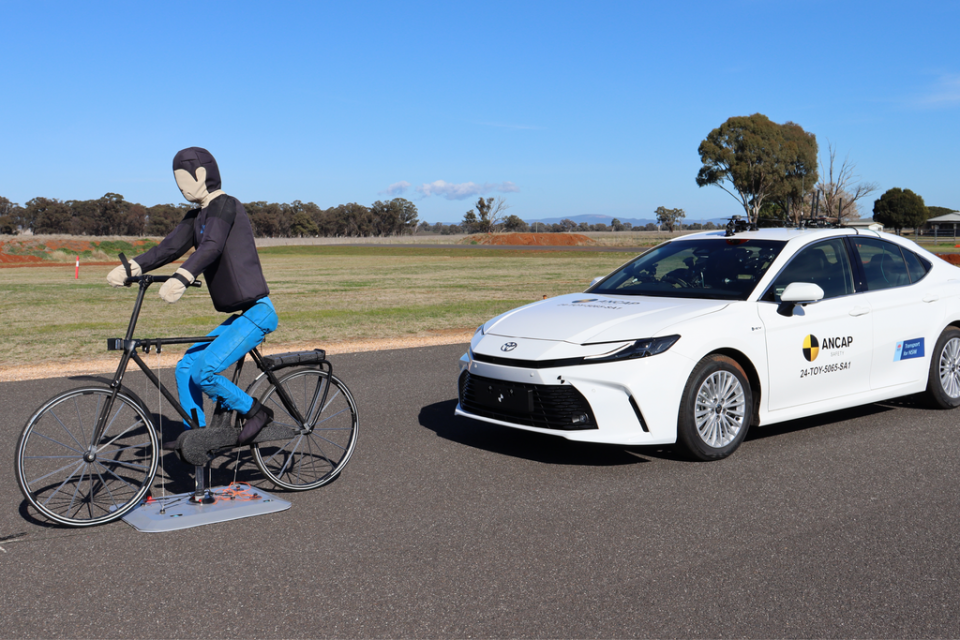
Among preventative measures, ANCAP will factor in advanced driver assist system (ADAS) ‘robustness’, evaluating the smoothness of systems such as fatigue warnings, lane assists and emergency braking.
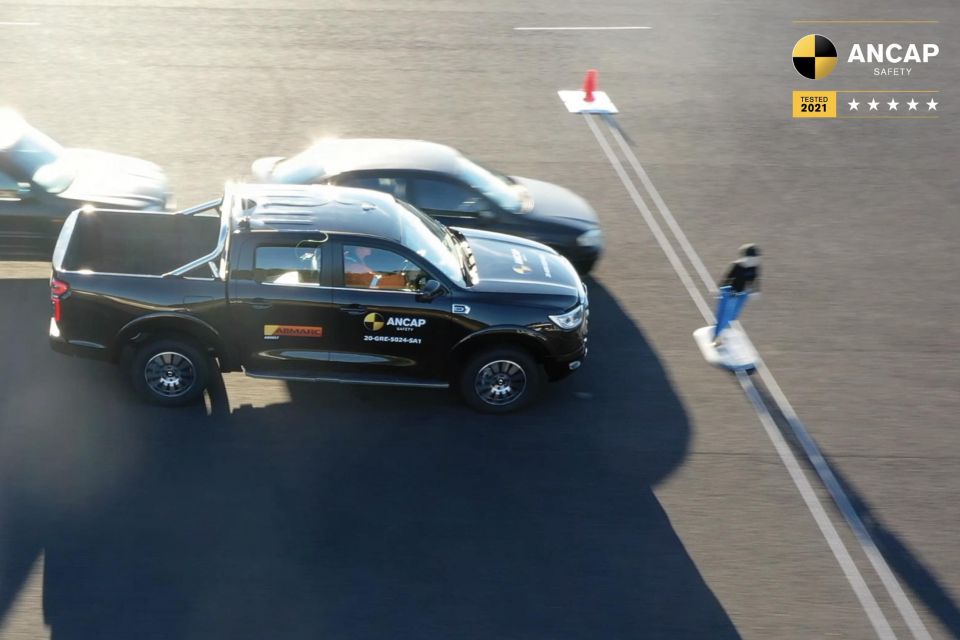
The step comes after several automakers recalibrated ADAS settings in Australian models following customer complaints they were too intrusive and made driving more difficult.
A study from insurance company AAMI published earlier this year found one in five Australian drivers switched off ADAS they found annoying, obviously limiting their effectiveness.
Many new car buyers have also been critical of new vehicles lacking physical buttons for key vehicle functions, which have moved into infotainment screen menus.

This criticism has seen Volkswagen confirm plans to bring dash switches back in future models, while a survey of Hyundai owners in North America in 2024, too, showed a disdain for the removal of physical buttons – something ANCAP has addressed with its new protocols.
“From 2026, we’re asking car makers to either offer physical buttons for important driver controls like the horn, indicators, hazard lights, windscreen wipers and headlights, or dedicate a fixed portion of the cabin display screen to these primary driving functions,” its report said.
The new protocols will also give points to vehicles able to ‘interpret’ pedal misapplication – mistaking one pedal for another – and provide a preventative response.
Post-crash
Post-collision changes include a requirement for electric vehicles (EVs) to isolate their batteries – in order to prevent electrocution of first responders – and alert emergency services in the event of a crash.
Many new cars have electrically operated door handles, often flush with the body, which under the new protocols will need to operate after any sort of collision including when power may not be available.
MORE: Australian Government scraps plans for lower speed limits
#ANCAP #safety #assessment #target #annoying #tech #EVs #triplezero #calls