Ferrari’s first electric car, the Elettrica, is the result of four years of internal development, yet one key component comes from outside Maranello.
The battery cells that power the car’s 122kWh structural pack are supplied by South Korean manufacturer SK On, which signed a new memorandum of understanding with Ferrari in March 2024 to deepen collaboration on future cell technology.
The MoU, signed in Seoul by Ferrari CEO Benedetto Vigna and SK On CEO Lee Seok-hee, formalises a partnership that began in 2019. Since then, SK On has supplied cells for Ferrari’s plug-in hybrid models including the SF90 Stradale, SF90 Spider, 296 GTB and 296 GTS.
The new agreement moves the relationship beyond supply into joint research and development, with both companies pledging to continue to lead innovation in cell technology.
Ferrari began work on the Elettrica in 2020 with the goal of building a fully electric vehicle (EV) that retained the precision and feedback of its combustion and hybrid models. The battery took four years to finalise and is assembled in Maranello using SK On’s nickel-manganese-cobalt (NMC) cells.
CarExpert can save you thousands on a new car. Click here to get a great deal.
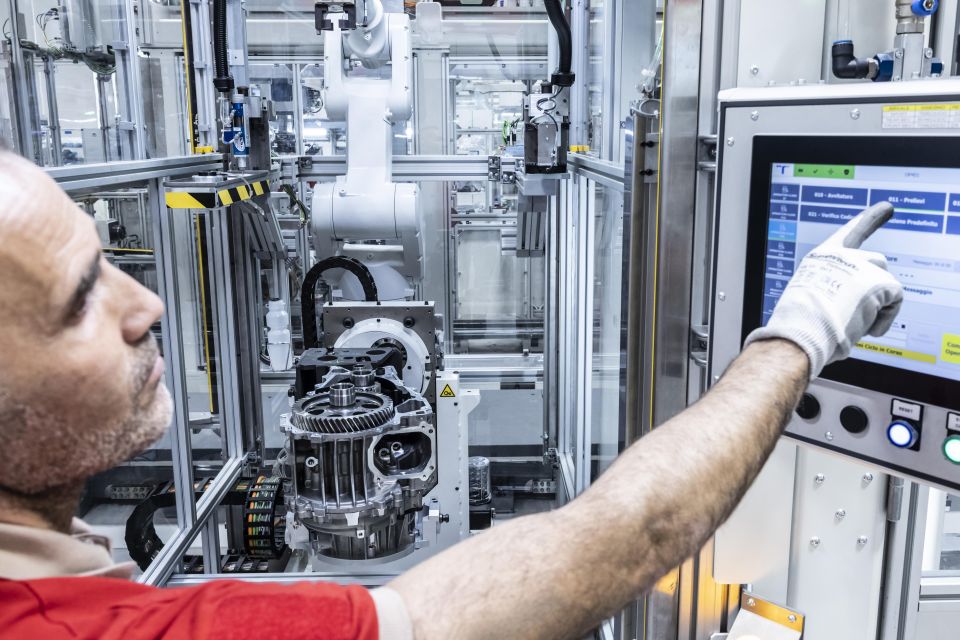
The result is a structural pack that acts as both an energy source and a load-bearing element within the aluminium chassis. It contains 210 cells across 15 modules, each replaceable under Ferrari’s Forever program, which guarantees long-term serviceability for electrified models.
SK On’s cells deliver an energy density of about 305Wh/kg at cell level and 195Wh/kg at pack level, figures consistent with Ferrari’s official data. The battery operates at 880 volts, supports 350kW DC fast-charging and 22kW AC charging, and can deliver up to 1200 amps of peak current.
Ferrari integrates the cells into its own casing, cooling plates and electronics inside the company’s new e-Building, the facility dedicated to producing its hybrid and electric models. The pack is attached at 20 points within the chassis, increasing overall rigidity and lowering the centre of gravity by roughly 80mm compared with an equivalent V8 model.
The decision to partner with SK On reflects both technical and strategic priorities. While Ferrari continues to design and manufacture most components in-house, large-scale cell production requires industrial capacity and chemical expertise.
SK On’s high-nickel NMC chemistry provides the right combination of power, energy density and thermal stability for Ferrari’s performance and longevity targets. The supplier’s flexible production scale also allows smaller, high-specification batches with tight quality control.
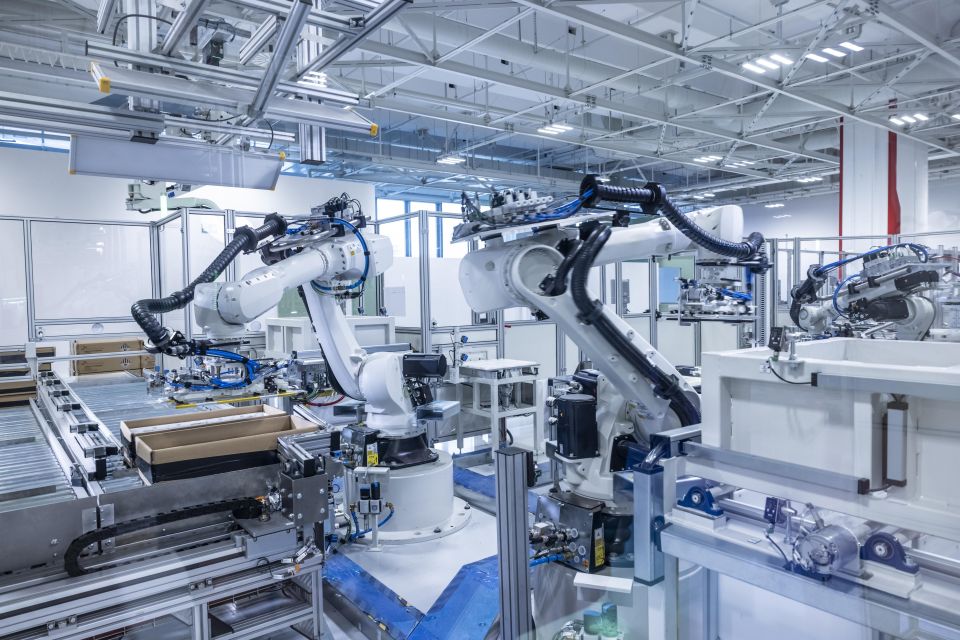
For Ferrari, this ensures consistency and traceability across each batch of cells used in the Elettrica and future models. The MoU formalises this alignment and confirms the companies’ intent to co-develop next-generation cell chemistry and manufacturing processes. It also secures Ferrari a reliable long-term source of advanced cells while maintaining its focus on bespoke engineering and integration.
Inside the e-Building, SK On’s cells are assembled into Ferrari’s structural casing, fitted with the brand’s proprietary Battery Management System and control electronics, and tested through simulated crash, vibration and thermal cycles. The collaboration ensures the pack meets Ferrari’s requirements for stiffness, weight distribution and durability.
For SK On, the contract is small in volume but significant in visibility. Partnering with Ferrari places the Korean battery maker in a prestige segment that reinforces its technological reputation. For Ferrari, it provides a proven energy source that complements its in-house capability in control software, power electronics and mechanical integration.
The partnership highlights a wider shift in the automotive landscape. In the combustion era, Ferrari defined itself through self-sufficiency. In the electric era, it is redefining itself through collaboration with world-leading specialists.
As production of the Elettrica approaches, the alliance between Ferrari and SK On represents a blend of Italian craftsmanship and South Korean battery science, setting the direction for how Maranello will compete in the electric age.
MORE: Explore the Ferrari showroom
#South #Korea #powering #Ferraris #electric #future