Suzuki Australia is gearing up for an onslaught of electrified vehicles, and it says its parent company’s Indian operations will be key to getting such cars into local showrooms.
Maruti Suzuki is an Indian subsidiary of the Suzuki Motor Corporation, and its largest subsidiary in terms of production volume and sales. Founded by the Indian government in 1981 as a joint venture with Suzuki, Maruti Suzuki became wholly owned by the Japanese manufacturer in 2007.
Since then, it has been responsible for producing countless Suzuki models for domestic and export markets, including Australia. These models have included the Baleno, the current Jimny XL, and now the Fronx Hybrid.
”It’s essentially the same brand. We are Suzuki. They are Suzuki. They are part of the organisation,” Suzuki Australia general manager Michael Pachota told CarExpert.
CarExpert can save you thousands on a new car. Click here to get a great deal.
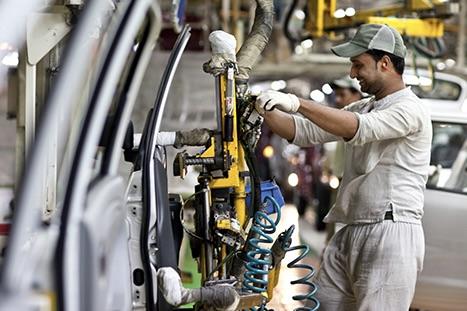
“And we control the future of products from a global perspective, the Suzuki Motor Corporation, that’s the mother company. That being said, from a production perspective, the opportunities are endless.
“Some of our newest, most state-of-the-art production plants are in India now, based on the fact that, you know, they’re probably running out of space in Japan.”
Maruti Suzuki operates four manufacturing facilities, with two in the state of Haryana, located in northern India. One is its Gurugram plant, a 300-acre facility responsible for producing Indian examples of cars like the S-Cross and Ignis, as well as the Australian-market Jimny.
The other is the Manesar plant, a larger, 600-acre facility responsible for producing the Australian-market Baleno up until the model’s local axing in 2022. Combined, these two plants have a claimed annual production capacity of 1.5 million units.
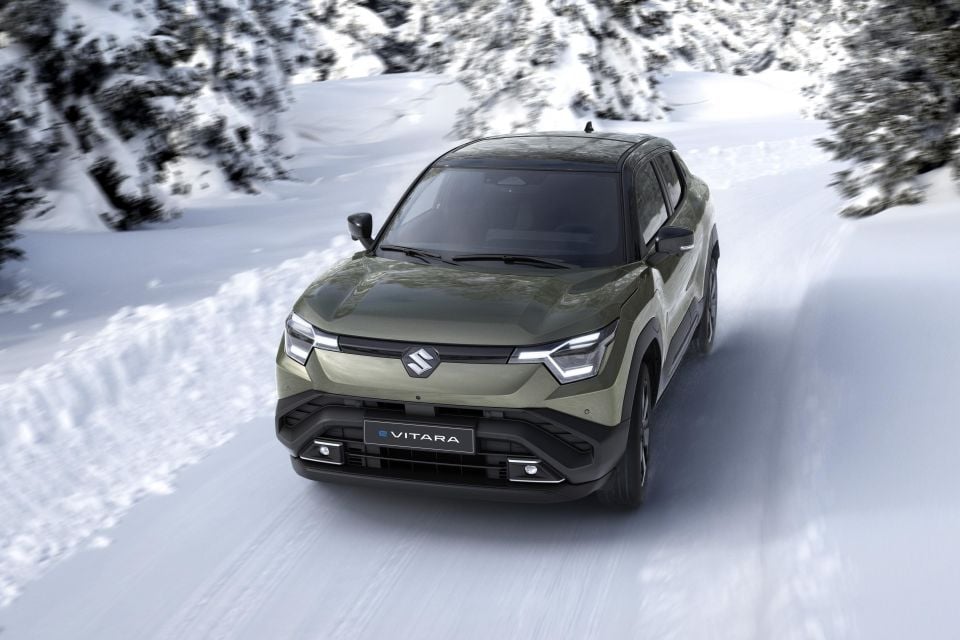
A third is Suzuki Motor Gujarat, located in western India. This facility opened in 2017 and has a total annual production capacity of 750,000 units across its four plants, one of which is a dedicated engine and powertrain plant.
Produced in Gujarat are Australian examples of the mild-hybrid Fronx. Incoming models, like the eVitara, Suzuki’s first fully electric vehicle (EV), began production at the Gujarat facility in April this year and will be sold in Australia from early 2026.
Other Australian models, like the Swift Hybrid, are built in Makinohara, Japan, while the incoming Vitara Hybrid – related to the eVitara in name only – is built in Esztergom, Hungary.
“With that said, you’ve got to tailor to the market and be in good positions where you can distribute vehicles from an export perspective, and India is a perfect place to do so,” Mr Pachota told CarExpert.

“We have 100 Japanese staff over there doing quality control all the time as well. It doesn’t matter what plant the vehicle is manufactured in, the quality will always remain undeniably Suzuki.”
Additionally, Maruti Suzuki began production at its newest facility in Kharkhoda, Haryana, in February 2025, with an initial annual capacity of 250,000 units. The company has predicted this plant will become the world’s third-largest car manufacturing facility once fully operational.
Maruti Suzuki is also building a second manufacturing plant near its Gujarat facility with an annual production capacity of 1 million cars, which, once up and running in 2029, could serve as a launchpad for future EVs after the eVitara.
“The opportunities for EVs … eVitara will be manufactured in India, so that’s the first step towards that goal,” Mr Pachota added.
MORE: Suzuki Vitara electric, hybrid SUVs locked in for Australia
MORE: Everything Suzuki
#India #ties #Suzuki #Australias #plans